Overview
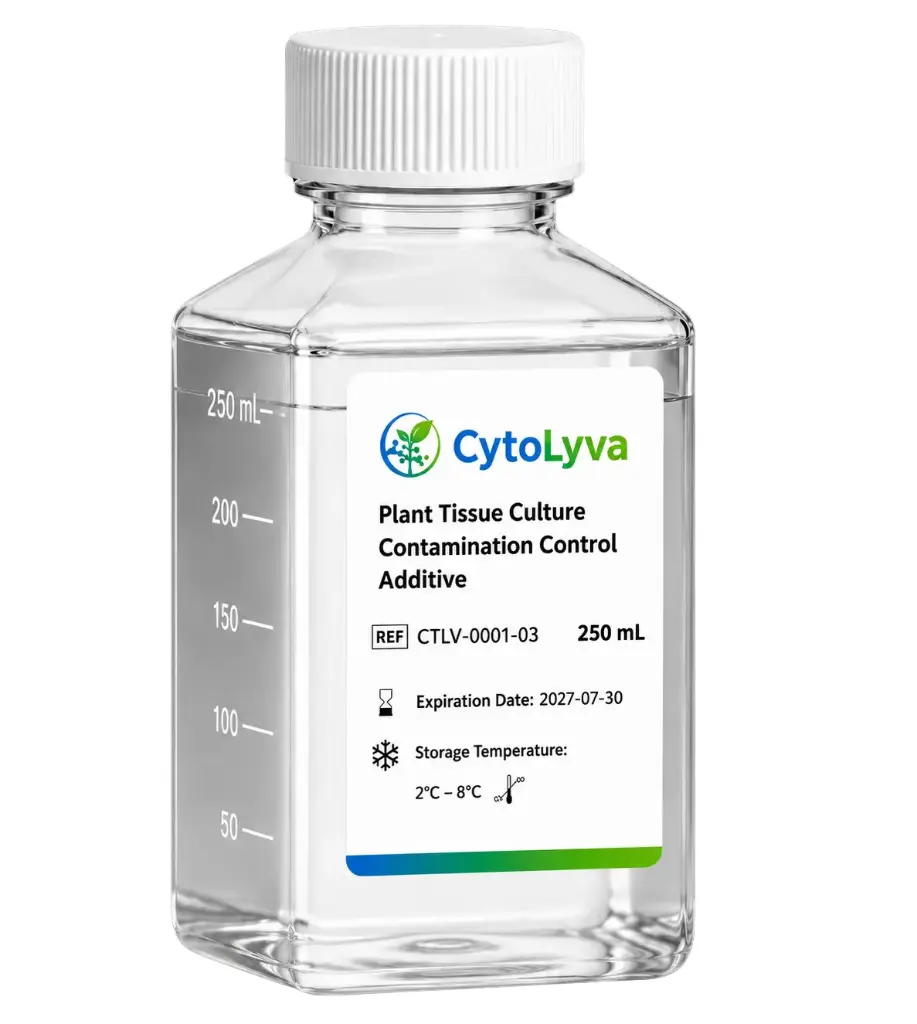
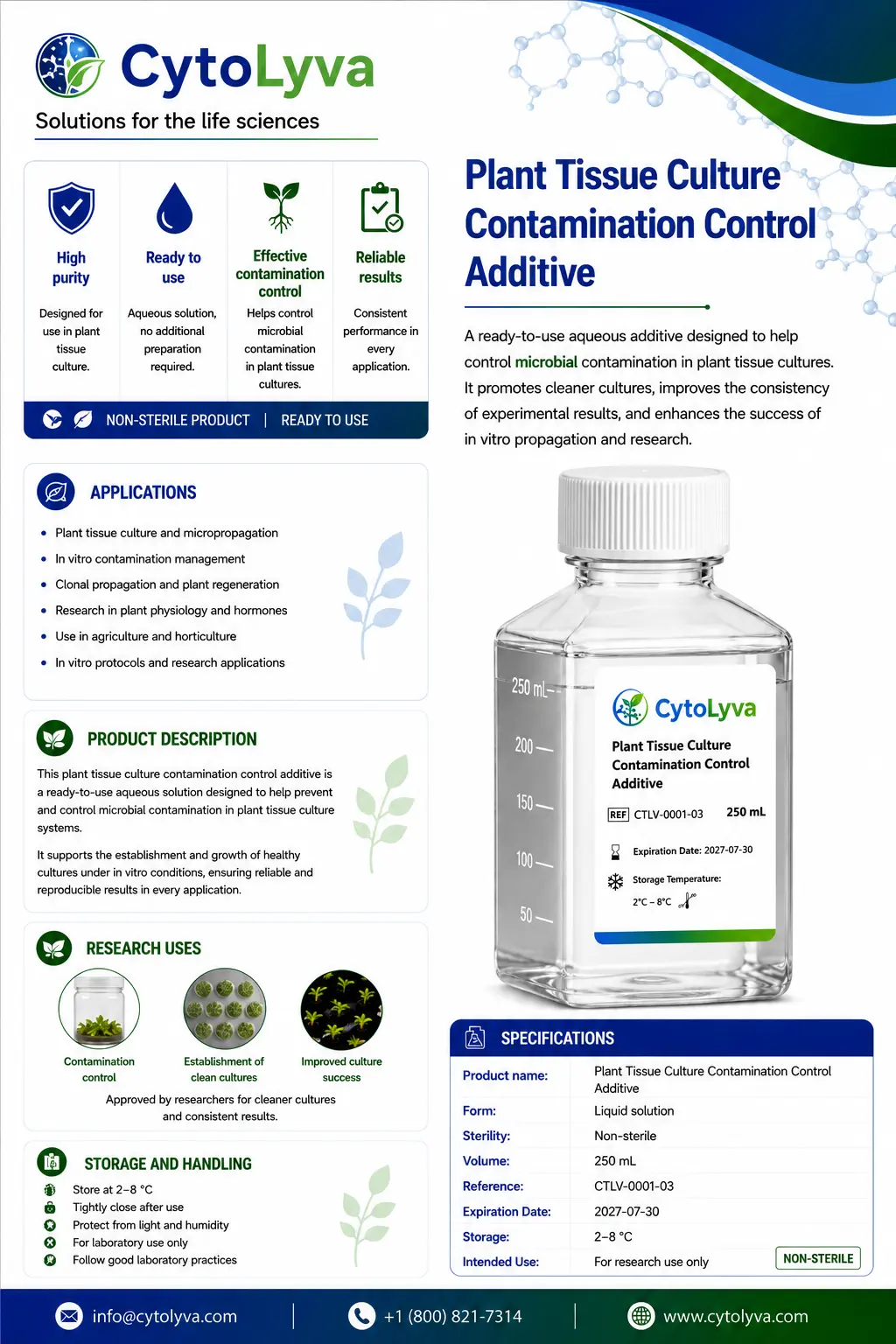
Plant Tissue Culture Contamination Control Additive is a laboratory media supplement designed to support the establishment and maintenance of in-vitro plant tissue culture systems.
During plant micropropagation workflows, contamination originating from explants, handling, or environmental exposure can disrupt culture development. When incorporated into culture media, this additive helps maintain stable culture conditions and supports successful plant tissue culture establishment.
The reagent is suitable for use in solid or liquid plant culture media and is compatible with most standard plant tissue culture formulations used in research laboratories and micropropagation facilities.
This product is intended exclusively for laboratory plant tissue culture applications.
Key Features
- Supports stable conditions in plant tissue culture systems
- Compatible with most standard plant culture media formulations
- Effective at low working concentrations
- Suitable for both solid and liquid culture media
- Compatible with standard media preparation workflows
- Useful when working with challenging explant material
Applications
Plant Micropropagation
Supports stable culture conditions during shoot multiplication and rooting stages in plant tissue culture systems.
Explant Establishment
Facilitates the establishment of cultures from plant material collected from greenhouse or field environments.
Callus Culture
Suitable for callus induction experiments where consistent culture conditions are important for successful tissue development.
Plant Regeneration Studies
Applicable in plant regeneration protocols involving organogenesis or somatic embryogenesis.
Plant Biotechnology Research
Useful in plant transformation workflows and other experimental procedures involving plant tissue culture.
Compatible Culture Media
The additive can be used with most commonly employed plant tissue culture formulations, including:
- Murashige & Skoog (MS) medium
- Gamborg B5 medium
- Woody Plant Medium (WPM)
- Chu N6 medium
- Custom plant tissue culture media
Recommended Usage
The additive is typically used at low concentrations during plant tissue culture media preparation.
Culture Stage | Suggested Concentration |
Explant establishment | 0.1–0.2 % (v/v) |
Routine micropropagation | 0.05–0.1 % (v/v) |
Sensitive plant material | optimize experimentally |
Optimal concentrations may vary depending on plant species, explant source, and laboratory conditions.
General Protocol
1. Prepare Culture Medium
Prepare the plant tissue culture medium according to the desired formulation.
2. Add the Additive
Add the Plant Tissue Culture Contamination Control Additive to the medium at the desired final concentration.
3. Mix Thoroughly
Mix the medium to ensure even distribution of the additive.
4. Sterilization
Sterilize the medium according to standard laboratory procedures appropriate for the selected medium formulation.
5. Dispense Medium
Pour the prepared medium into sterile culture vessels.
6. Introduce Plant Material
Transfer plant explants to the prepared medium using standard sterile tissue culture techniques.
Tips for Best Results
- Perform small-scale tests when working with new plant species.
- Combine proper explant surface sterilization with appropriate culture practices.
- Adjust additive concentration depending on plant species and culture conditions.
Storage and Stability
- Store according to the conditions indicated on the product label.
- Avoid repeated contamination of the stock solution during routine laboratory use.
Intended Use
- For research and laboratory plant tissue culture use only.
- Not intended for agricultural field use, environmental applications, or crop protection purposes.